 1 of 1
- RadioActive
- Moderator
 Offline
RB's Mark Towhey Interviews Board Op, Explains "Carts" In Show Finale
As part of an ongoing tribute to those "behind the scenes," CFRB substitute afternoon host Mark Towhey introduced his producer/board op on Monday towards the tail end of his show. His name is David Hunter and - unless it's an incredible coincidence - I believe that was the name of one of John Oakley's operators over on AM640, who he would thank at the end of each night's show.
In the brief segment, Hunter said he loved the feeling of sitting behind a multi-channel board and keeping the show going without any mistakes. My favourite part of the mini-interview, though, came when Towhey asked Hunter if he knew what a "cart" was. Hunter said he did, but had never really seen one or used one.
Towhey then explained to the audience that "cart" was short for cartridge, which used to hold all the music and spots that a radio station would play.
It wasn't a sensational bit, but it sure was nice to hear someone on the other side of the glass get a few seconds of fame and explain his job to the audience. The guys and gals in the control room do yeoman's (and yeowoman's?) work but rarely get their due on air. I hope he keeps doing this for the rest of the week.
- newsguy1
- Member
Offline
Re: RB's Mark Towhey Interviews Board Op, Explains "Carts" In Show Finale
I always had the greatest respect for my news producers.
I really appreciated how they had to do an anonymous task that made me look good, while performing special technical tasks, hopefully flawlessly.
Also in my own career I had to do a lot of my own operating and producing so I was always aware of what went into doing those tasks day in and day out.
- RadioActive
- Moderator
Offline
Re: RB's Mark Towhey Interviews Board Op, Explains "Carts" In Show Finale
newsguy1 wrote:
I always had the greatest respect for my news producers.
I really appreciated how they had to do an anonymous task that made me look good, while performing special technical tasks, hopefully flawlessly.
Also in my own career I had to do a lot of my own operating and producing so I was always aware of what went into doing those tasks day in and day out.
Agreed. They can produce miracles with audio and no one ever knows who was behind it. I spent a number of years behind the glass and I have to say, outside of a few unexpected emergencies, I mostly had a blast.
- •
 Thread Starter
- RadioAaron
- Member
Offline
Re: RB's Mark Towhey Interviews Board Op, Explains "Carts" In Show Finale
"Cart" is one of the industry terms that's outlasted its original meaning. Today, it's still common to refer to the code for an audio file as a "cart number"
Another is "Spin" - as in "How many spins did the new Taylor Swift song get this week?" Records spun, CDs spun, even hard drives spun. No much spinning these days.
"Song Card" In music scheduling software, the details of a track (there's another one) are pulled up on the song card, a reference to the physical index cards that used to be shuffled for rotation. The icon is even a little index card.
Others?
- RonaldS
- Member
Offline
Re: RB's Mark Towhey Interviews Board Op, Explains "Carts" In Show Finale
I'm having a flashback to a WKRP clip where Les Nessman tells someone (probably Johnny) that he can "touch my tearsheets, but don't touch my carts" - can't find it on YouTube though.
- RadioActive
- Moderator
Offline
Re: RB's Mark Towhey Interviews Board Op, Explains "Carts" In Show Finale
Towhey's last guest on Tuesday was producer Ben Harrison, who's been with CFRB for almost a decade.
He did have a bit of an inside entrance to the business - his father is a long time radio guy out east. He recalled being on the air with his dad when he was just 1 1/2 years old, when they did a duet of The Beverly Hillbillies Theme song together.
Again, good to hear someone who does that job being given a few minutes of fame. They otherwise pretty much toil in obscurity but you can't do a talk show without them.
- •
Thread Starter- mace
- Member
Offline
Re: RB's Mark Towhey Interviews Board Op, Explains "Carts" In Show Finale
Occasionally, you would hear the mysterious Bev Edwards who was Wally Crouter's behind the scenes person.
- mic'em
- Member
Offline
Re: RB's Mark Towhey Interviews Board Op, Explains "Carts" In Show Finale
I remember when the 250 watt station I worked at in Summerside P.E.I. got the first cart machine, 1974 I think. What a change . From having to spin through several recordings on reel to reel for commercials , trying to keep continuity and no dead air, to just pushing a button was magical. Likely the greatest invention in radio history , it really changed the game.
Last edited by mic'em (December 31, 2025 9:29 am)
- RadioActive
- Moderator
Offline
Re: RB's Mark Towhey Interviews Board Op, Explains "Carts" In Show Finale
I remember when the 250 watt station I worked at in Summerside P.E.I. got the first cart machine, 1974 I think. What a change . From having to spin through several recordings on reel to reel for commercials , trying to keep continuity and no dead air, to just pushing a button was magical. Likely the greatest invention in radio history , it really changed the game.
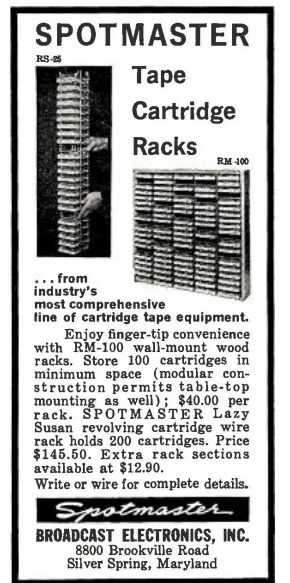
And they were workhorses, rarely screwing up on air. The only thing that could go wrong is if somebody stopped them before they recued themselves and you hit the play button and nothing happened. But that wasn't the machine's fault.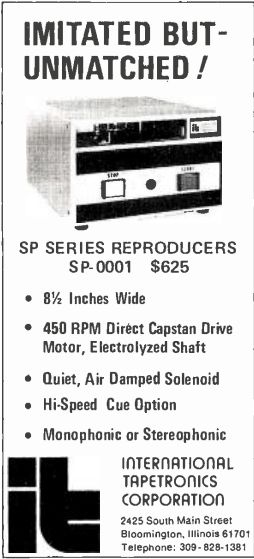
- •
Thread Starter